Leak Inspection and Sealing Repair for Plastic Molds
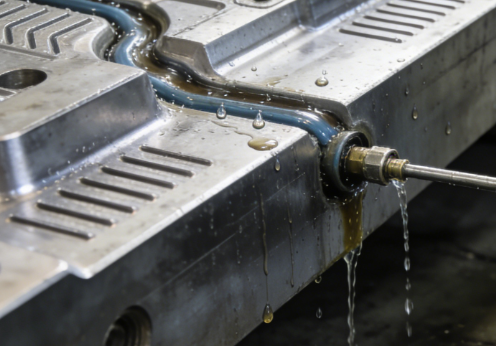
Cooling water channel leakage is a common fault in plastic mold injection production. Leaks cause mold rust, uneven mold temperature, and plastic part defects such as sink marks, deformation and weld lines, even disrupting production continuity. The core principle of mold leak inspection and repair is accurately locating the leak first, then performing targeted sealing based on the water channel structure. Prioritize replacing seals for routine repairs, use professional machining for wear or crack damage, and take daily precautions to reduce leakage risks. Below are practical leak detection, sealing repair methods and protection tips for injection molding sites, covering all common water channel leakage scenarios.
1. Precise Leak Location Methods
Leak detection is the foundation of sealing repair. Adopt industry-standard pressure and visual combined methods to quickly locate leaks and fault types, with a common test pressure of 0.4-0.6MPa (matching the normal working pressure of mold cooling channels) to avoid secondary damage from high pressure.
Static water pressure test: Block the water channel inlets and outlets, inject clean water with a pressure test pump to 0.4-0.6MPa and hold for 30 minutes. Observe the mold surface, pipe joints and insert joints—seepage or dripping indicates the leak point. A continuous pressure drop on the gauge means hidden leaks that need further inspection.
Pressurized air test: For molds inconvenient to fill with water (e.g., installed molds, rapid inspection), inject compressed air to 0.3-0.4MPa after blocking channels, and apply soapy water to suspected areas. Continuous bubbles mark the leak point. This method is ideal for hidden leaks like insert gaps and fine cracks, featuring easy operation and high efficiency.
Visual wiping inspection: For surface leaks, wipe the area around water channels, joints and seal positions dry with a clean cloth, turn on the cooling system at normal pressure, and observe for 10-15 minutes. Water stains indicate the leak point. No extra tools are needed, making it suitable for emergency on-site detection of obvious leaks at joints and pipe connections.
2. Regional Sealing Inspection and Repair
Mold leaks mainly occur at water quick connectors, seal positions, cavity/core insert channels, manifold channels and pipe joints. Different faults require targeted repairs, prioritizing fluororubber seals (superior to ordinary rubber in temperature and aging resistance, adapting to 40-90℃ mold working temperature) for both emergency and long-term stable sealing.
Water quick connector leakage: The most common fault, caused by aged/deformed seal rings or loose lock nuts. Disassemble the connector, replace with a new fluororubber O-ring, clean impurities and scale, reinsert the connector and tighten the nut moderately (avoid cracking the interface). Replace worn or cracked copper/stainless steel connectors of the same specification directly.
Seal position leakage: Common at the water channel seal between cavity/core and mold plate, caused by worn seal grooves, aged O-rings or impurities in grooves. Clean scale and plastic residue, replace with a new fluororubber O-ring; lay a 0.1-0.2mm PTFE gasket for slightly worn grooves to enhance sealing; reprocess severely worn grooves to ensure dimensional accuracy.
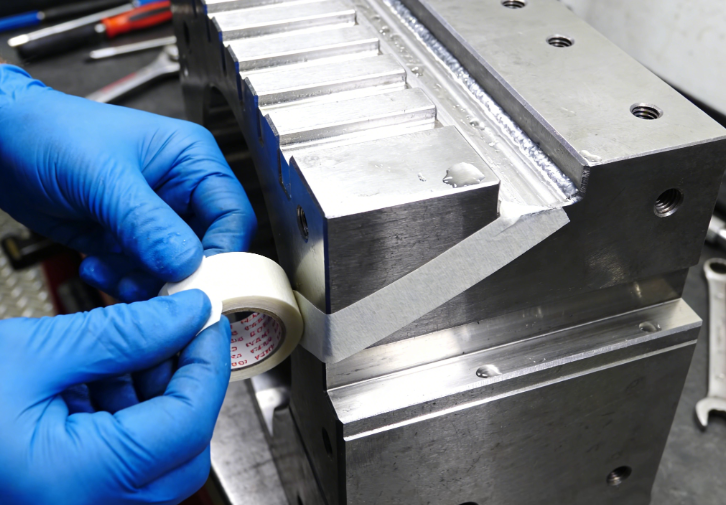
Cavity/core insert channel leakage: Caused by excessive fit clearance or cracked water holes in inserts. For clearance leakage, wrap Teflon tape on the insert mating surface (for low-pressure channels only) or install a custom fluororubber seal ring, tap the insert tight and retest pressure. For fine cracks, repair with argon arc welding, grind flat, ream the hole to keep it unobstructed, and retest pressure after welding.
Manifold internal channel leakage: Common in hot runner molds, caused by cracked welds or poorly welded joints (hidden fault). Disassemble the manifold, re-weld cracked areas, conduct a 0.4MPa water pressure test for 30 minutes to confirm no leakage, then grind the weld surface smooth to avoid slag blockage. Replace severely cracked manifolds of the same specification directly.
Pipe connection leakage: Caused by aged pipes or loose clamps. Tighten clamps and replace aged silicone cooling pipes for emergency repair; install a fluororubber gasket or a quick connector with sealing function for leaks between external pipes and quick connectors to ensure tight sealing against water pressure impact.
3. Emergency Sealing Repair Tips
For minor on-production leaks that cannot be repaired by disassembly immediately, use on-site emergency methods to temporarily block leaks and maintain production, then perform thorough repairs during downtime. These methods are only for slight seepage and small leaks, not for large-flow leakage.
For slight seepage at connectors and seal positions: Clean the leak area, apply high-temperature mold sealant (temperature resistance ≥150℃), wait 10-15 minutes for curing, then test pressure—the sealant can quickly block micro gaps for temporary sealing.
For slight leakage at insert mating surfaces: Inject a small amount of mold sealant into the gap, tap the insert tight and use after curing to avoid sealant flowing into channels and causing blockage.
For slight pipe connection leakage: Wrap the joint with waterproof tape, tighten the clamp for temporary sealing, and replace with new pipes and connectors later.
4. Sealing Acceptance Standards After Repair
After leak repair, conduct a pressure test to confirm sealing effect and avoid secondary leakage, adopting the industry-standard static water pressure test for simple and accurate inspection:
Fully block the repaired water channels, inject water to 0.4-0.6MPa and hold for 30 minutes. The repair is qualified if there is no pressure drop and no seepage, dripping or water stains on the mold surface.
For repaired hot runner manifold channels, extend the pressure holding time to 60 minutes, heat the manifold to working temperature (80-120℃) and retest pressure to confirm no leakage at high temperature, avoiding seal gap expansion due to temperature changes.
After qualified acceptance, blow residual water out of channels with a high-pressure air gun and apply rust inhibitor on the channel inner wall and mold metal surface to prevent rust from residual water.
5. Daily Protection for Mold Water Channel Sealing
Daily protection effectively reduces leakage risks, focusing on regular seal replacement and channel cleaning to avoid seal failure from scale, aging and improper operation. Set protection cycles based on production frequency—a full channel inspection every 3-6 months is recommended for mass production molds.
Regular seal replacement: Fluororubber O-rings and connector seals have a service life of 3-6 months; replace them on time for mass production molds, prioritizing original specifications for precise matching.
Regular scale cleaning: Calcium and magnesium ions in cooling water form scale, blocking channels and wearing seal grooves. Clean channels with mold descaling agent every 3 months to remove scale and impurities, keep the inner wall smooth and reduce seal wear.
Standard channel operation: Adjust water pressure slowly when starting the cooling system to avoid seal falling off and joint loosening from high-pressure water impact; blow water out of channels completely and inject rust inhibitor during mold storage to prevent inner wall rust and seal position oxidation.
Regular component inspection: Check water connectors, pipes and clamps every 1-2 months, tighten loose lock nuts and clamps in time, and replace aged or cracked pipes and connectors for preventive maintenance.
Summary
The core of plastic mold water leakage repair is accurate leak location followed by targeted regional repair. Replace fluororubber seals for routine faults, and use welding or reprocessing for wear and crack damage; handle minor leaks with high-temperature sealant for emergency. In daily production, implement regular seal replacement, channel descaling and standard operation. Through a combination of prevention and timely repair, water channel leakage faults can be eliminated, mold temperature stability maintained, mold service life extended, and consistent plastic part molding quality guaranteed.