Reasonable Setting of Injection Mold Temperature Parameters
The rational setting of injection mold temperature parameters is central to balancing part quality, molding efficiency, and production stability. Its core logic lies in precisely regulating the temperatures of the cavity, core, hot runner, and cooling system based on the crystalline/amorphous properties of plastics, as well as part structure and precision requirements, to achieve the dual goals of qualified quality and optimal efficiency. Industry data shows that cooling time accounts for 50%–70% of the injection cycle, and mold temperature fluctuations exceeding ±3°C directly cause part dimensional deviations of more than ±0.1mm. Therefore, temperature setting must follow the scientific approach of "determining ranges by material, adjusting levels by structure, differentiating temperatures by zone, and fine-tuning via trial molding", with all parameters referencing industry standards such as GB/T 1040.2 and ISO/TS 16949 and mass production verification data.
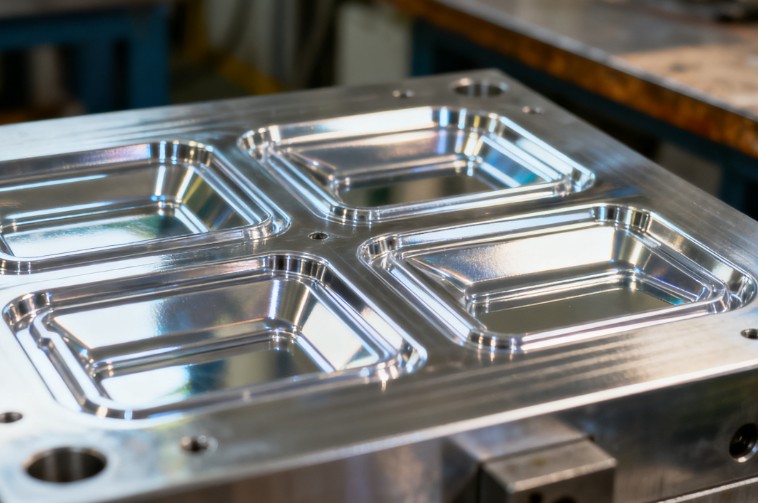
1. Core Principles of Mold Temperature Setting
Mold temperature setting adheres to three core principles to ensure scientificity and rationality. First, it must match plastic material properties: amorphous plastics (e.g., ABS, PC) require controlled internal stress, so mold temperature should be neither too high nor too low; crystalline plastics (e.g., PP, PA) need balanced crystallinity—higher temperatures improve part strength but extend cycles, while lower temperatures shorten cycles yet risk incomplete crystallization. Second, it should align with part structure and appearance requirements: thick-walled, high-gloss, and high-precision parts need elevated temperatures to optimize filling and solidification, while thin-walled and simple-structured parts can use lower temperatures to boost efficiency. Third, it must balance quality and productivity: mold temperature is not simply higher or lower, but should minimize cooling time and production costs while ensuring defect-free parts.
2. Temperature Specifications for Key Zones
Differentiated temperature control is required for different zones to ensure coordinated performance. The cavity-core temperature difference is typically 5–10°C (cavity higher), ensuring external surface finish and avoiding internal sink marks; for long, flat parts, this difference is reduced to 3–5°C, with overall cavity surface temperature variation controlled within 2°C. Hot runner systems use independent temperature control: nozzle temperature is 10–20°C higher than the front of the injection molding machine barrel, and manifold temperature is kept uniform; heat-sensitive plastics (e.g., POM) require strict upper limits to prevent degradation. Cooling system parameters are standardized: water cooling for general parts (coolant inlet temperature 20–40°C) and oil cooling for precision parts (temperature control accuracy ±0.5°C). Cooling water must maintain turbulent flow (Reynolds number Re ≥ 6000), with inlet-outlet temperature difference limited to 2–3°C.
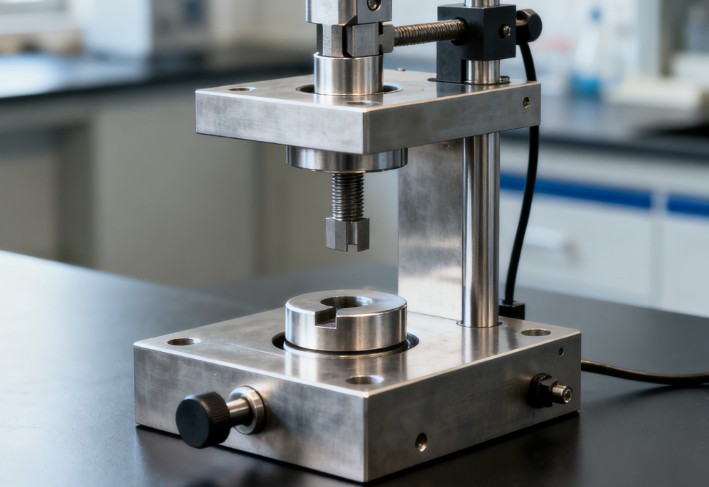
3. Industry Reference Ranges for Common Plastics
Widely accepted industry ranges apply to different plastics, with fine-tuning in practice: for amorphous plastics, ABS is recommended at 50–80°C (60–70°C for high-gloss parts), PC at 80–120°C (90–100°C for transparent parts), and PMMA at 35–80°C; for crystalline plastics, PP is 40–80°C (typically 50–60°C), PA6 at 70–110°C, PA66 at 80–110°C, POM at 90–120°C (oil cooling required), and PET preforms at 120–140°C. Glass-fiber reinforced plastics require mold temperatures 10–20°C higher than neat resins to reduce fiber blooming; PE has the lowest mold temperature requirement, at 20–50°C for efficient molding.
4. Practical Setting Process for Temperature Parameters
A scientific four-step process ensures reasonable parameter setup: basic setting, preheating and thermostating, trial molding adjustment, and stable finalization. Step 1 (Basic Setting): Determine the temperature range by plastic type, and select baseline cavity and core temperatures based on part wall thickness and precision. Step 2 (Preheating and Thermostating): Start the temperature control system, raise the temperature to 80% of the set value, hold for 10–15 minutes, then reach the target temperature to ensure overall mold temperature variation ≤ 0.2°C. Step 3 (Trial Molding Adjustment): Inspect part quality after the first shot—raise cavity temperature by 5–10°C for rough surfaces or visible weld lines; lower core temperature by 3–5°C for sink marks or sticking; adjust cavity-core temperature difference for warpage; increase temperature by 10–20°C and extend cooling time for excessive internal stress. Step 4 (Stable Finalization): Fine-tune until part yield ≥ 99.7%, then record cavity, core, hot runner, and coolant temperatures as standard parameters for mass production.
5. Temperature Control Key Points in Production
Strict temperature stability management is essential in mass production to avoid quality issues from parameter fluctuations. Equipment-wise, PID-controlled temperature systems ensure accuracy of ±1°C, with regular water circuit leak checks via 100Pa hydrostatic testing. Multi-cavity molds use zoned temperature control circuits, adjusting water flow per cavity to ensure uniform temperature across cavities. For special plastics, heat-sensitive grades (e.g., PVC, POM) require strict upper temperature limits and shortened melt residence time; high-temperature plastics (e.g., PA66, PBT) prioritize oil cooling to prevent water evaporation. Cooling channel design follows industry norms: channel diameter 6–12mm, distance from cavity wall 10–12mm, and single-channel length limited to 1.2–1.5m to eliminate cold spots.
In summary, there is no absolute fixed value for injection mold temperature setting; the core is the coordinated matching of material properties, part requirements, and production efficiency. Following scientific principles, precise zone control, industry-standard data, and standardized processes can reduce part warpage by over 38%, control dimensional tolerance within ±0.03mm, and shorten molding cycles by 15%–30%, providing stable and reliable technical support for injection molding production.