Guidelines for Injection & Packing Pressure Adjustment in Injection Molding
Injection and packing are the core stages of injection molding, directly determining filling integrity, dimensional stability, and surface quality. Parameters must be adjusted collaboratively to match material properties, mold structure, and part requirements. The following is a systematic debugging guide.
1. Injection Parameter Guidelines
The goal of injection is to fully fill the cavity at reasonable pressure and speed, while avoiding shear overheating, flash, or excessive internal stress.
1.1 Injection Speed
Speed should be set in stages following a "Slow-Fast-Slow" gradient:
Initial Stage (Gate Filling): Use low speed (10%~30%) to prevent gate damage, stringing, or whitening. Critical for brittle materials (PS, PC) or fine-pitch molds.
Middle Stage (Cavity Filling): Use high speed (50%~80%) to utilize melt inertia and reduce short shots. Suitable for thin-walled parts (<1.5mm) or high-flow materials (PE, PP).
Final Stage (Cavity Full): Switch to low speed (20%~40%) to avoid flash and reduce internal stress. Suitable for thick-walled or complex parts.
Debugging: Reduce initial speed for gate flow marks; increase middle speed for short shots; reduce final speed for flash.
1.2 Injection Pressure
Pressure must match speed to overcome flow resistance:
Baseline: 50~80 bar for low-viscosity materials (PE/PP); 80~120 bar for high-viscosity materials (PC/PA).
Adjustment: Increase by 5~10 bar if short shots persist after speed adjustment; decrease pressure for flash (prioritize speed over pressure).
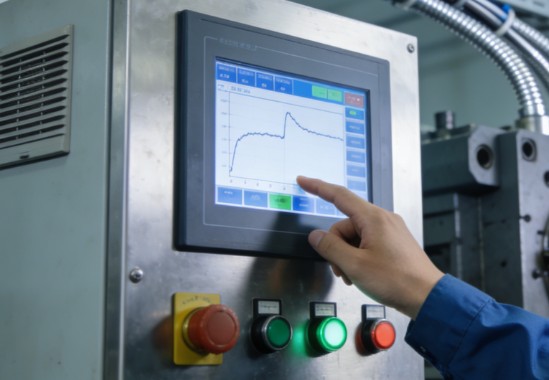
Monitoring: If actual pressure nears the upper limit, optimize the runner system or increase melt temperature to reduce resistance.
1.3 Shot Volume & V/P Switchover
The switchover position directly impacts packing efficiency:
Principle: Switch at 90%~95% filling to balance flash prevention and sink mark control.
Method: Determine full volume via short shot, then reduce by 10%~15% for initial setup. Fine-tune based on part weight or visual feedback.
Material Adaptation: Switch later (95%) for high-flow materials (LDPE); switch earlier (90%) for low-flow materials (PC) to prevent premature freezing.
2. Packing Parameter Guidelines
The goal of packing is to compensate for cooling shrinkage, eliminate sink marks, and improve dimensional stability without causing stress or flash.
2.1 Packing Pressure
Balance shrinkage compensation and stress control (typically 50%~80% of injection pressure):
Baseline: Start at 60% of injection pressure. Increase by 5~10 bar for sink marks (thick walls/ribs); decrease for flash or gate whitening.
Staged Packing: For complex parts, use a "High-Medium-Low" gradient to quickly compensate shrinkage initially and maintain dimensions later, reducing internal stress.
Material Adaptation: Crystalline materials (PE, PP) require higher pressure (70%~80%); amorphous materials (PC, ABS) require lower pressure (50%~60%).
2.2 Packing Time
Covers the solidification phase to ensure sufficient melt replenishment:
Baseline: Calculate as Wall Thickness (mm) × 1.5~2 seconds (e.g., 3~4 seconds for 2mm wall thickness).
Method: Extend until part weight stabilizes. Shorten if gate cracking due to residual stress occurs.
Mold Adaptation: Shorter time for hot runner molds (continuous feeding); longer time for cold runner molds (must compensate before gate freezes).
2.3 Packing Speed
Maintain low, stable speed to avoid shear heating or pressure shocks:
Setting: 10%~30% of injection speed for smooth replenishment.
Transition: Ensure a smooth switch from injection to packing to avoid mold deformation or flash. Enable gradient transition functions if available.
3. Collaborative Debugging Guidelines
Injection and packing are interdependent and must be optimized together:
Switchover Coordination: A fast injection speed allows for a later switchover; a slow speed requires an earlier switchover to prevent melt solidification.
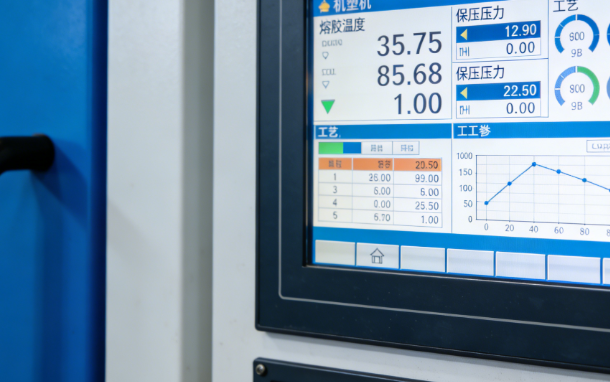
Pressure Gradient: A logical drop from injection to packing pressure is essential. Excessively high injection with low packing causes sink marks; low injection with high packing causes flash.
Material Specifics: High-viscosity materials (PA66) need higher pressure and longer packing time; low-viscosity materials (LDPE) require strict speed and pressure control to prevent flash.
4. Common Defects and Adjustment Solutions
| Defect Type | Injection Parameter Adjustment | Packing Parameter Adjustment |
|---|---|---|
| Short Shot | Increase injection speed/pressure; delay V/P switchover | Increase packing pressure; extend packing time |
| Flash | Decrease injection speed/pressure; advance V/P switchover | Decrease packing pressure; shorten packing time |
| Sink Marks | Delay V/P switchover; increase shot volume | Increase packing pressure; extend packing time |
| Internal Stress Cracking | Decrease injection speed/pressure | Decrease packing pressure; use staged packing |
| Air Bubbles | Decrease initial injection speed; optimize mold venting | Increase packing pressure; extend packing time |
5. Summary of Debugging Principles
Incremental Adjustment: Modify parameters in small increments, one variable at a time.
Data-Driven: Use objective data (weight, pressure curves) rather than subjective judgment.
Material Priority: Adapt parameters to material flow and shrinkage characteristics before adjusting the mold.
Following these guidelines ensures systematic optimization of injection and packing parameters, significantly enhancing part consistency and stability.